Learn
Our Impact
For two centuries, the Church in St. Louis has grown from a small frontier mission into a thriving Catholic community whose influence extends far beyond Missouri. This history section invites you to explore the milestones, the people, and the events that have defined our story from the earliest settlers and religious communities to the development of parishes, schools, and ministries that many continue to serve our region today. Here, we remember the foundations laid by those who came before us and rediscover the remarkable story that continues to inspire our Church today.
Timeline
 Pierre Laclède Liguest and Auguste Chouteau established St. Louis, naming it for King Louis IX — saint, crusader, and model Christian monarch.
The Cathedral Block, designated in the original town plan, quickly became the heart of civic and spiritual life.
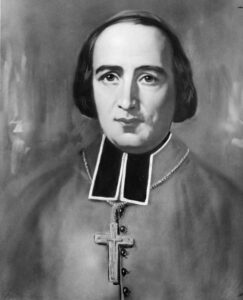
Bishop Louis William Valentine DuBourg sets his episcopal seat in St. Louis. He brought priests and religious sisters to create a cathedral, schools, and missions to Native peoples. He sent St. Rose Philippine Duchesne and the Religious of the Sacred Heart to St. Charles and Florissant, where they opened the first free school for girls west of the Mississippi.
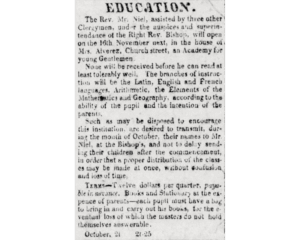
Bishop DuBourg donated his personal library and secured Madame Eugunie Alvarez’s home for a new college, appointing Rev. Francois Niel as headmaster. Saint Louis Academy opened on November 16, 1818, becoming the first college west of the Mississippi River and marking the start of the archdiocese’s long role in education.
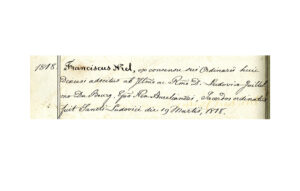
Francis Niel, ordained March 19, 1818. The first priest ordained in St. Louis
Bishop DuBourg needed priests to support the spiritual growth of his large diocese. Under his direction, the Vincentians founded St. Mary of the Barrens Seminary in October 1818, the first seminary west of the Mississippi. To this day, priestly formation remains a vital mission of the diocese.
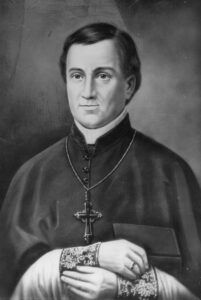 When Pope Leo XII created the Diocese of St. Louis, he entrusted Bishop Joseph Rosati with a mission territory stretching from the Louisiana border to the Rocky Mountains. Rosati sent missionaries deep into the American West, laying the foundation for more than twenty dioceses to follow.
On July 20, 1847, St. Louis became the first archdiocese in the Mississippi Valley. Archbishop Peter Richard Kenrick, the “Lion of St. Louis,” led the Church through immigration, epidemics, anti-Catholic riots, and major growth. From St. Louis, the Church expanded, establishing more than forty dioceses across the Midwest and Plains.
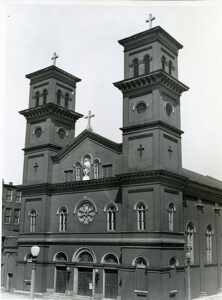

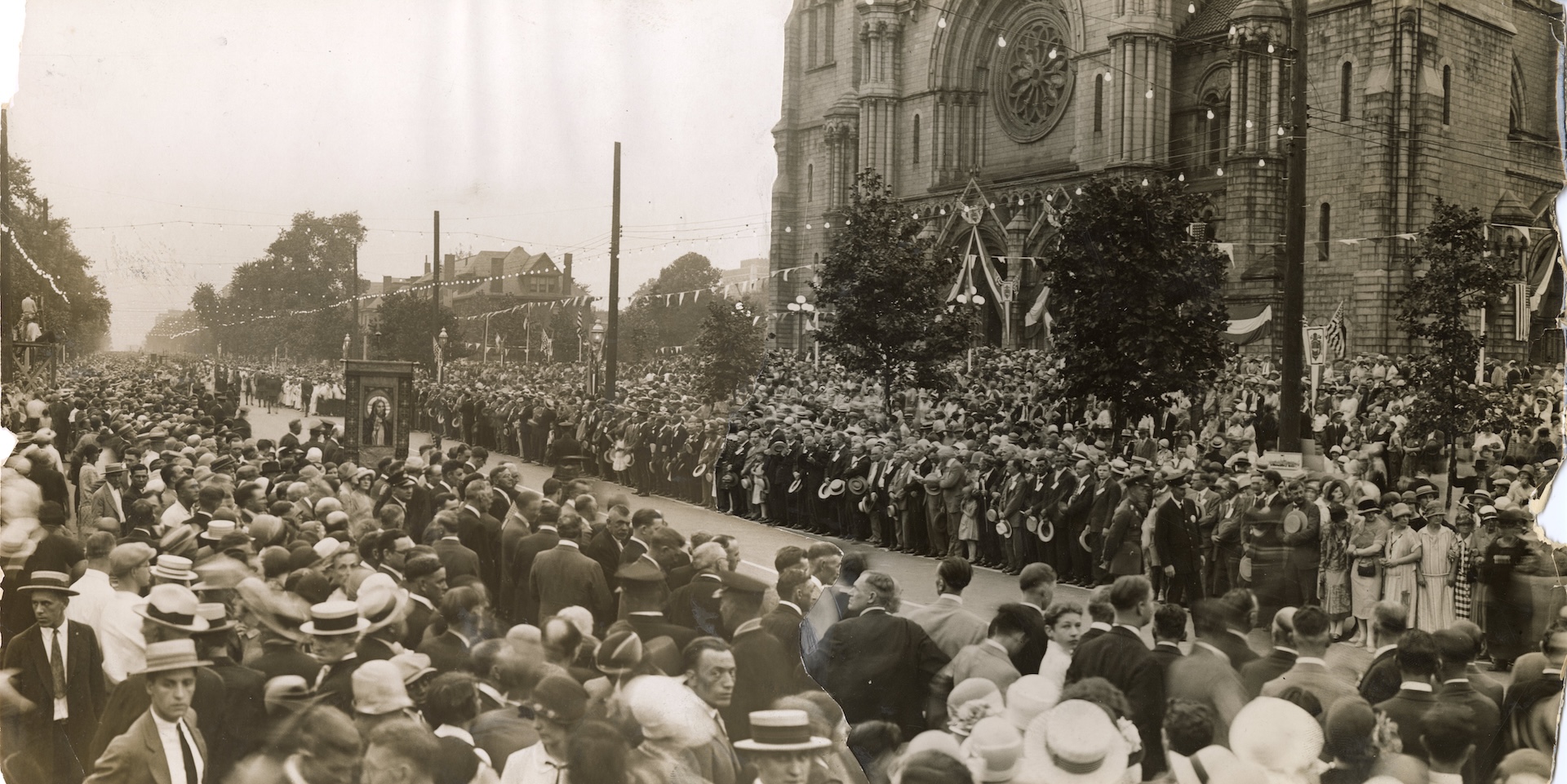
On June 29, 1926, the Diocese of St. Louis marked its centennial with the solemn dedication of the Cathedral Basilica. Pope Pius XI later called it “the most beautiful church in the new world.” More than 100,000 faithful lined Lindell Boulevard as the Blessed Sacrament was carried in procession, celebrating a century of faith and promise.
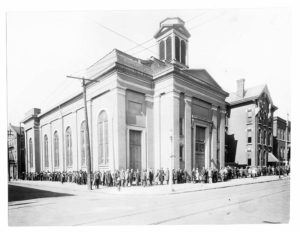
Neighborhood parishes shaped Catholic identity in the city, building schools, spiritual centers, and cultural homes for immigrant communities from Germany, Ireland, Poland, Bohemia, and Italy. Priests and sisters carried out works of mercy:
- Father Peter Dunne aided “street children.”
- Father Tim Dempsey founded residences for the homeless.
- Catholic Charities expanded orphanages, shelters, and hospitals.

Confronting a past of enslaved labor, Archbishop Joseph Ritter, in one of his first acts after arriving in St. Louis, ordered the racial integration of Catholic schools. He acted eight years before the U.S. Supreme Court’s Brown v. Board of Education. When segregationist opponents threatened lawsuits, Ritter declared they would incur automatic excommunication. His decisive action made St. Louis a model of Catholic commitment to justice.

With the postwar baby boom and suburban growth, Archbishop Ritter established three parishes per year. He expanded high schools, built Duchesne in St. Charles, and opened Cardinal Glennon Memorial Children’s Hospital in 1956, the only hospital in the U.S. operated by an archdiocese.
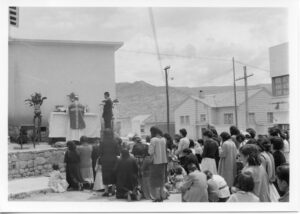
To support the spiritual needs of Latino Catholics in St. Louis and in Central and South America, Archbishop Ritter established a mission to Bolivia in 1956. It was the first mission of its kind by any U.S. diocese. In the Archdiocese of La Paz, archdiocesan priests served rural and impoverished communities for the next 64 years.

On January 26, 1999, Pope John Paul II visited St. Louis and celebrated Mass at the Trans World Dome before more than 100,000 faithful. His call to “be witnesses to hope” became a touchstone for the new millennium in the “Rome of the West.”
Bishops
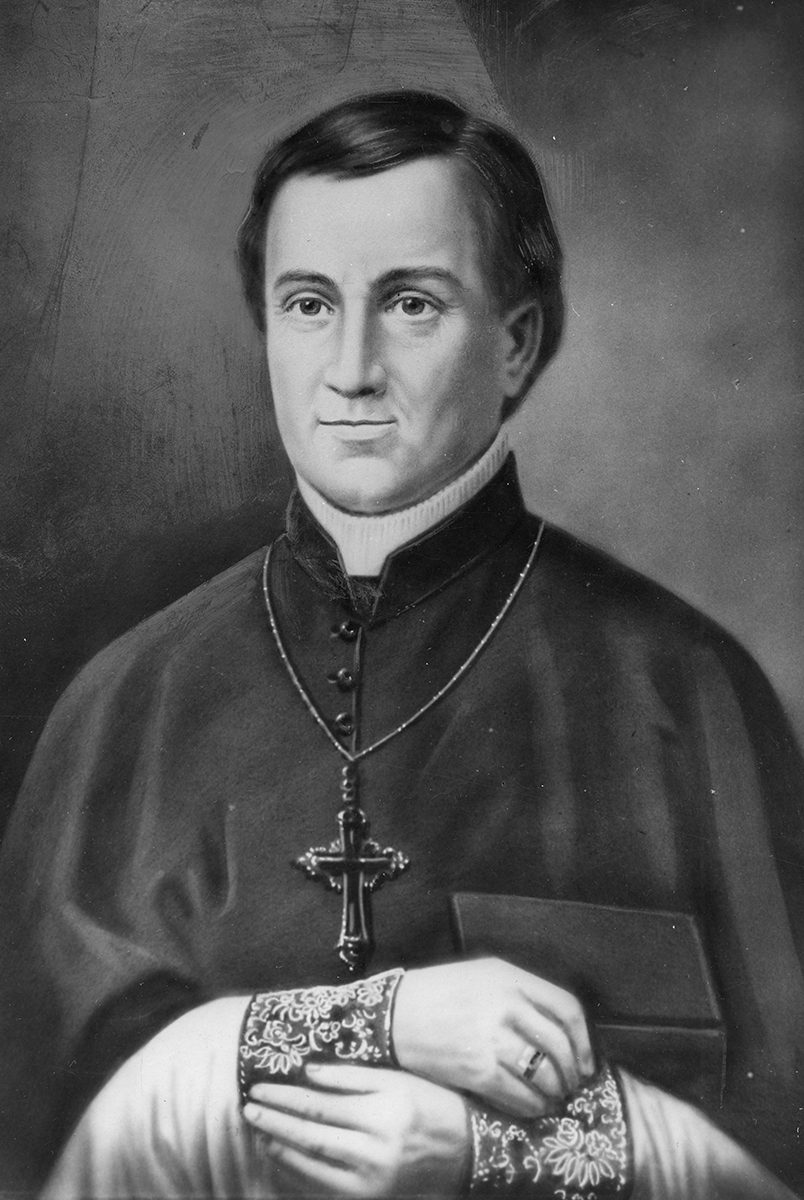
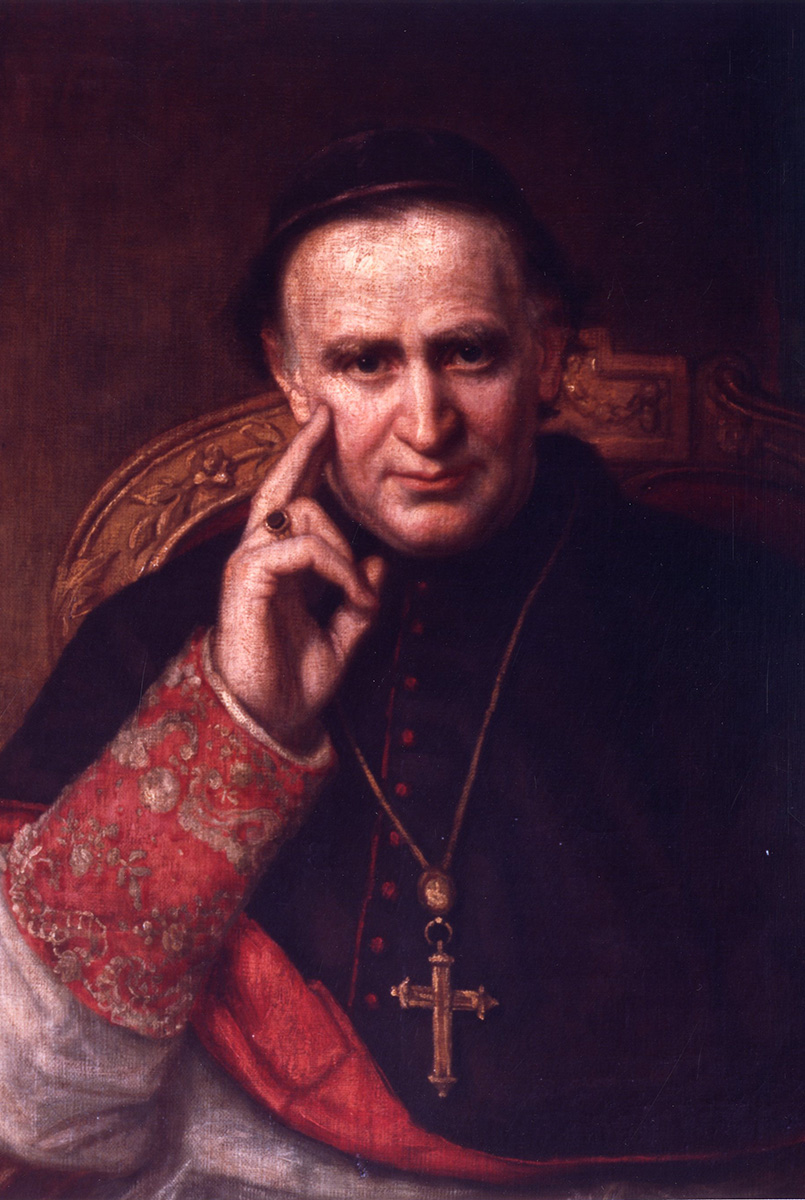
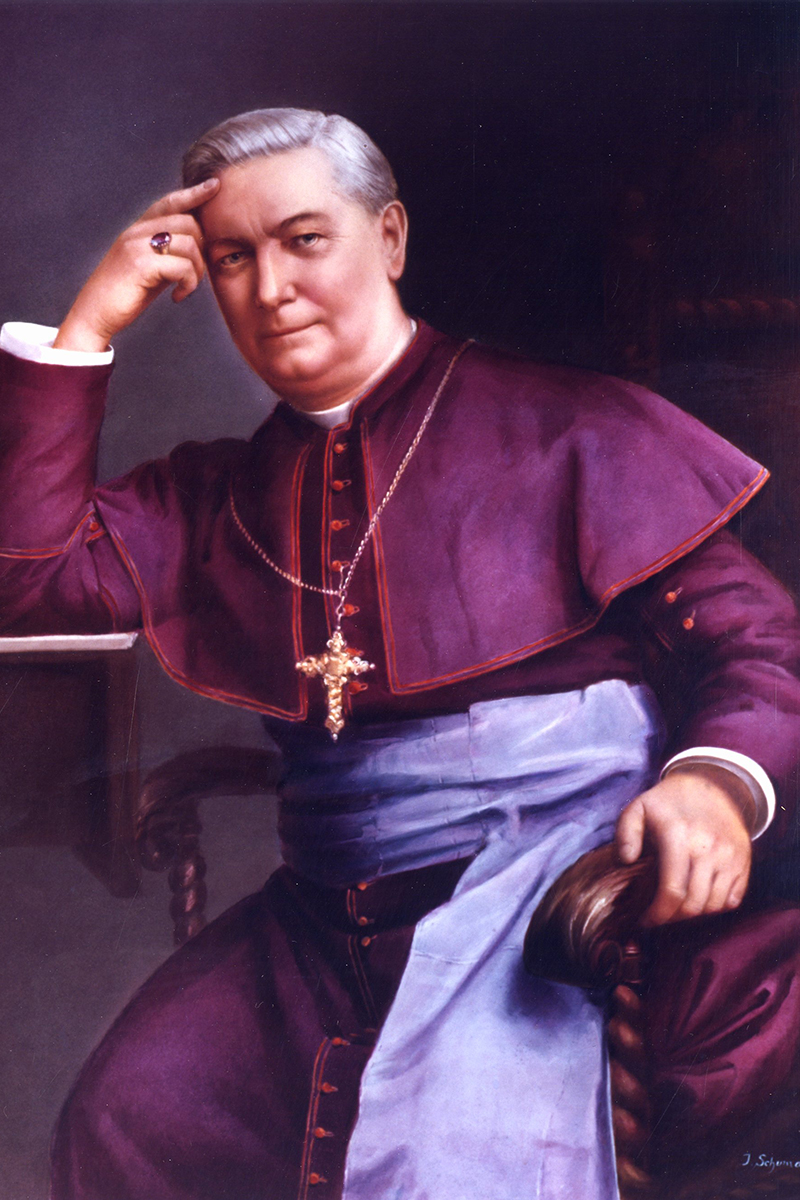
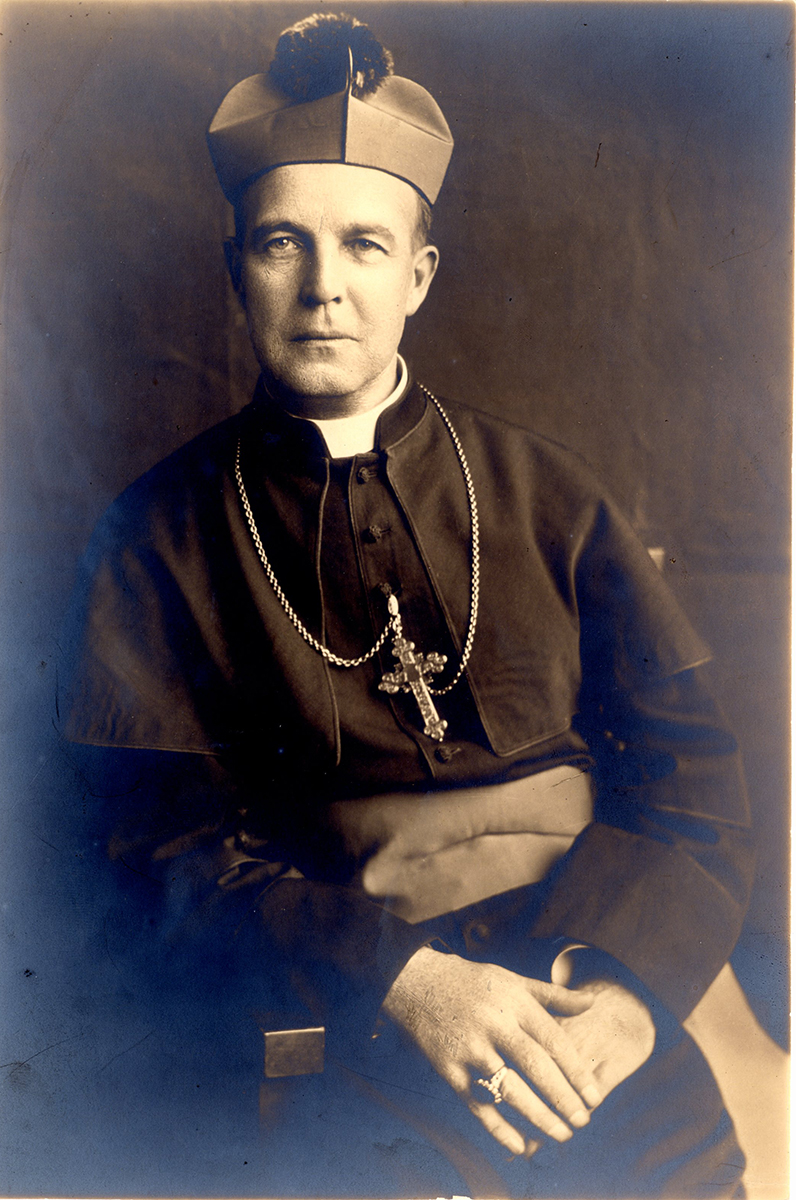
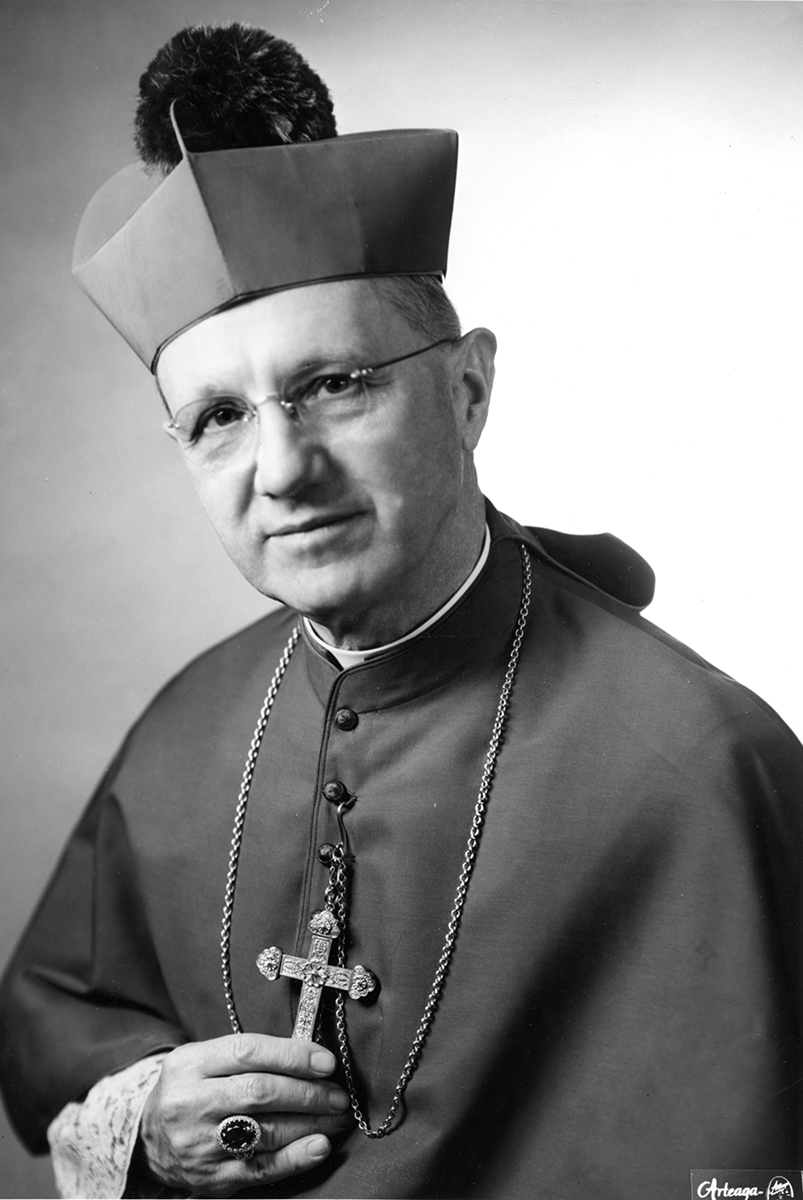
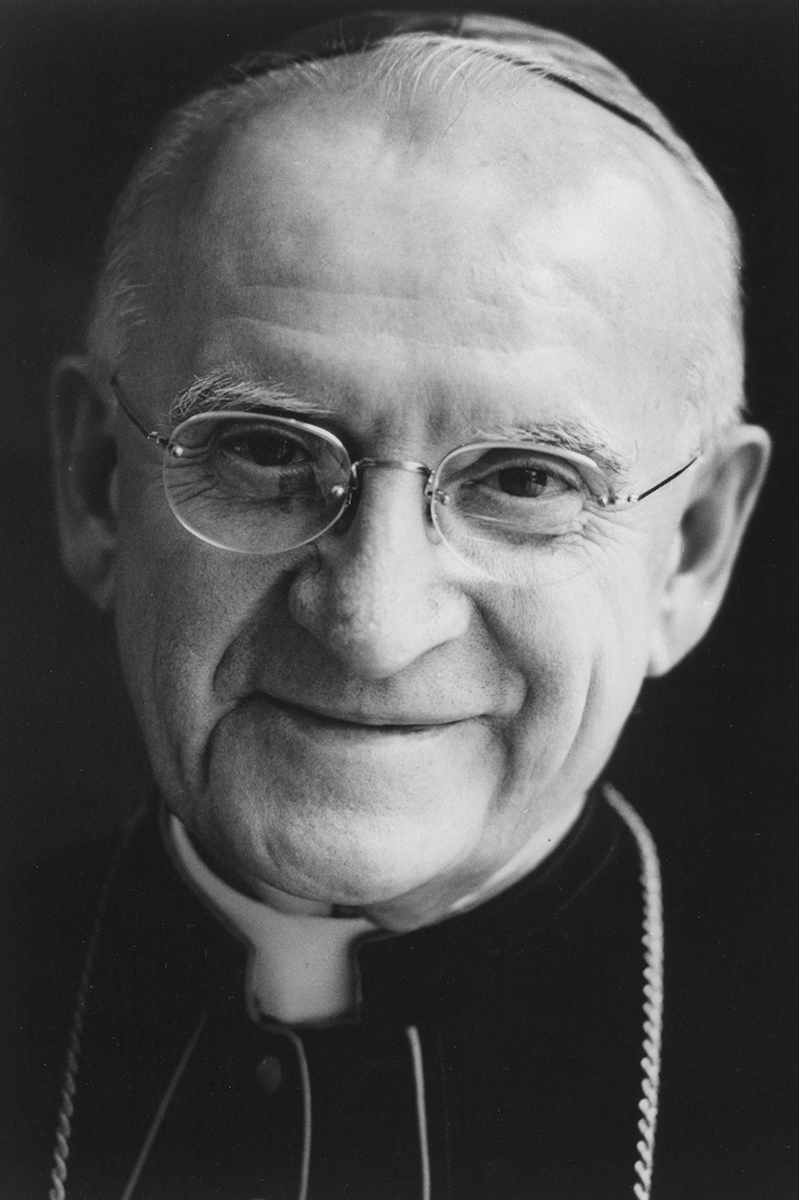
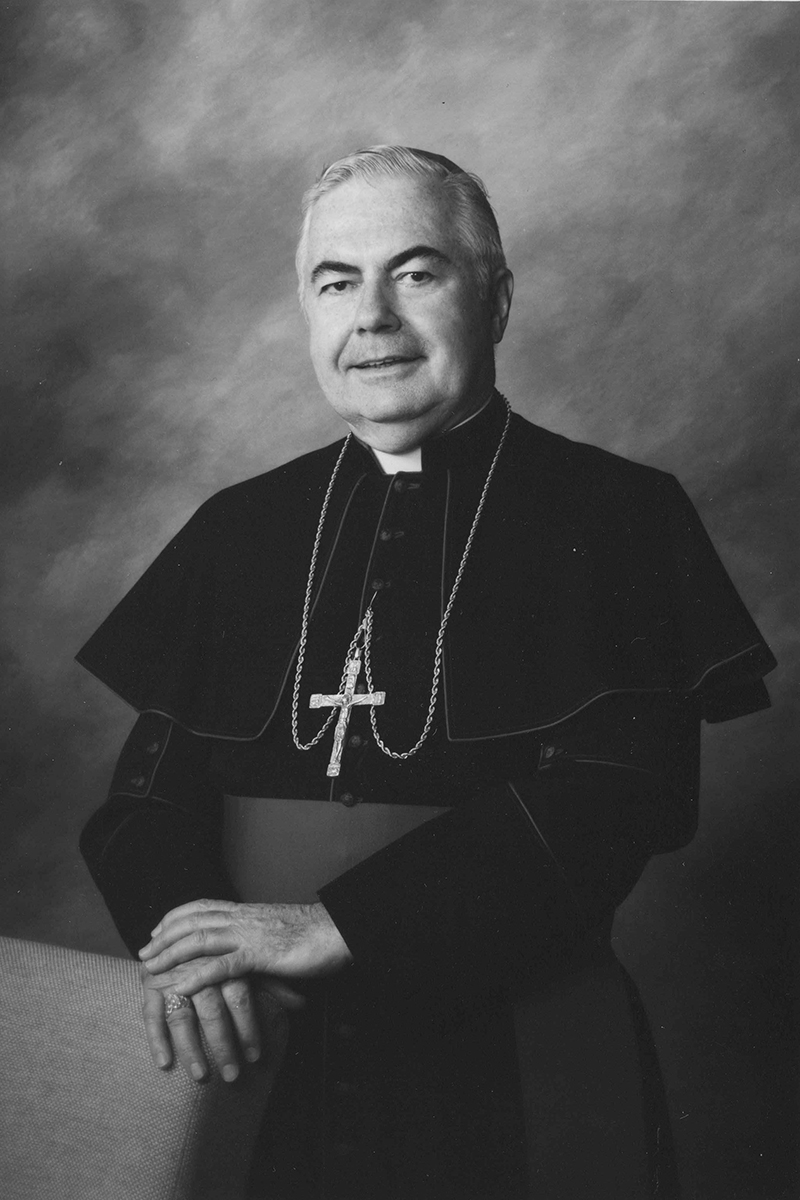
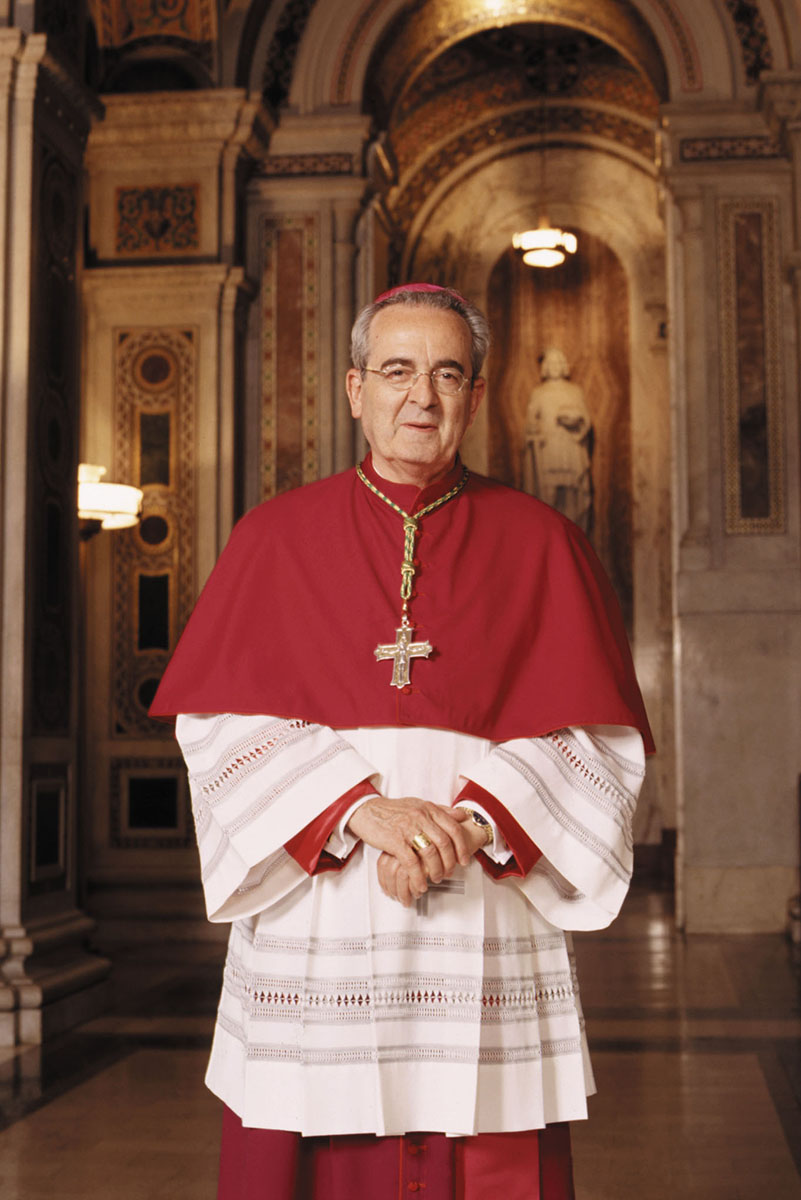
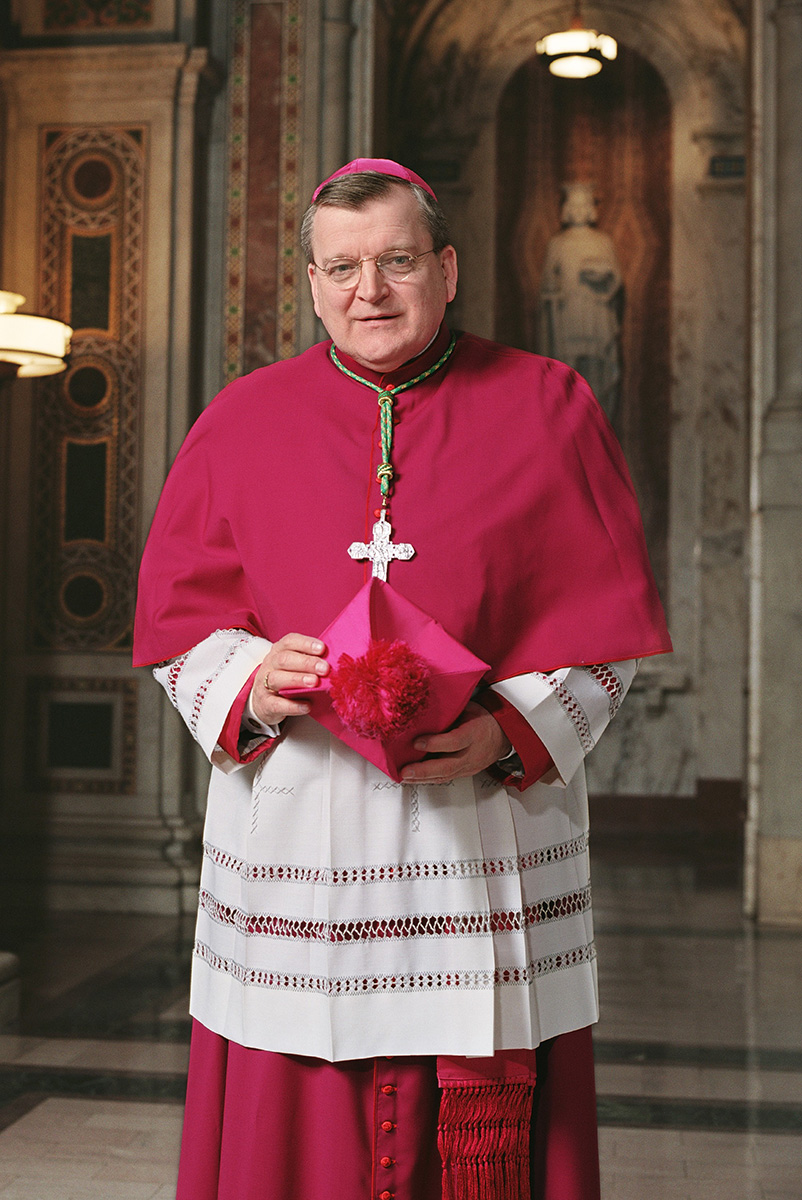
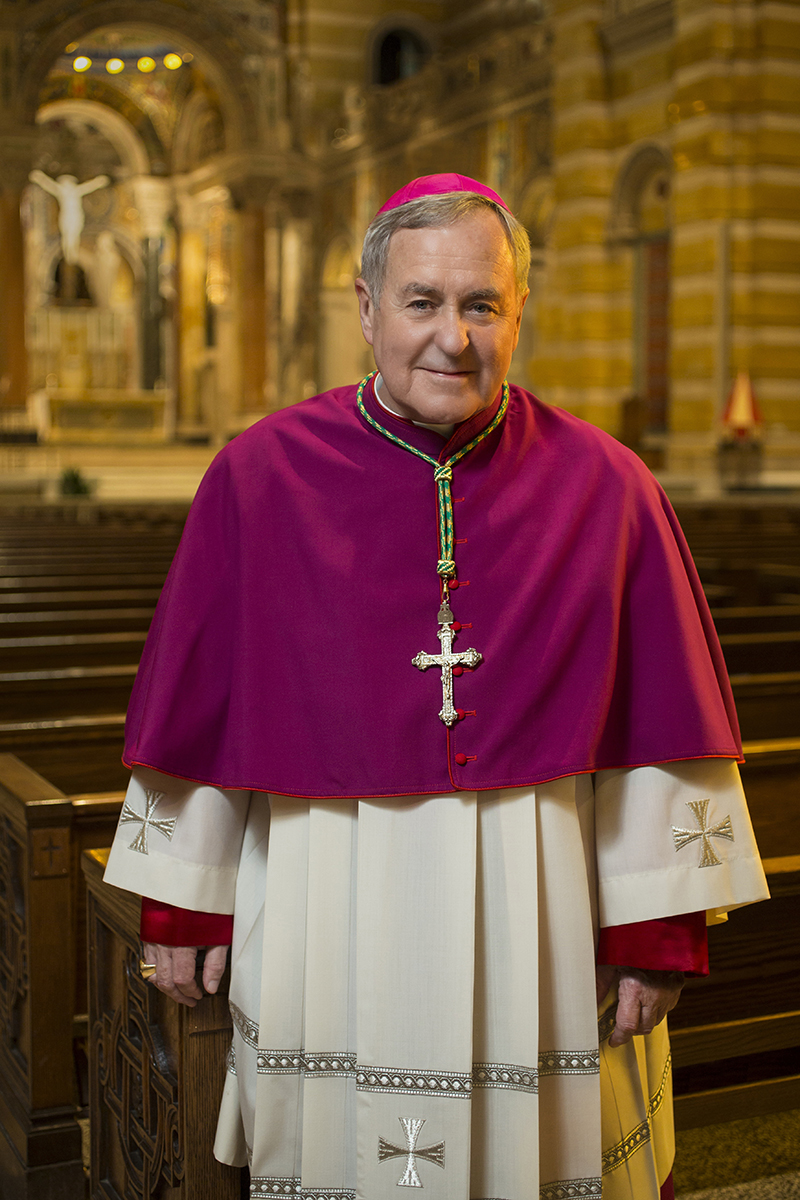
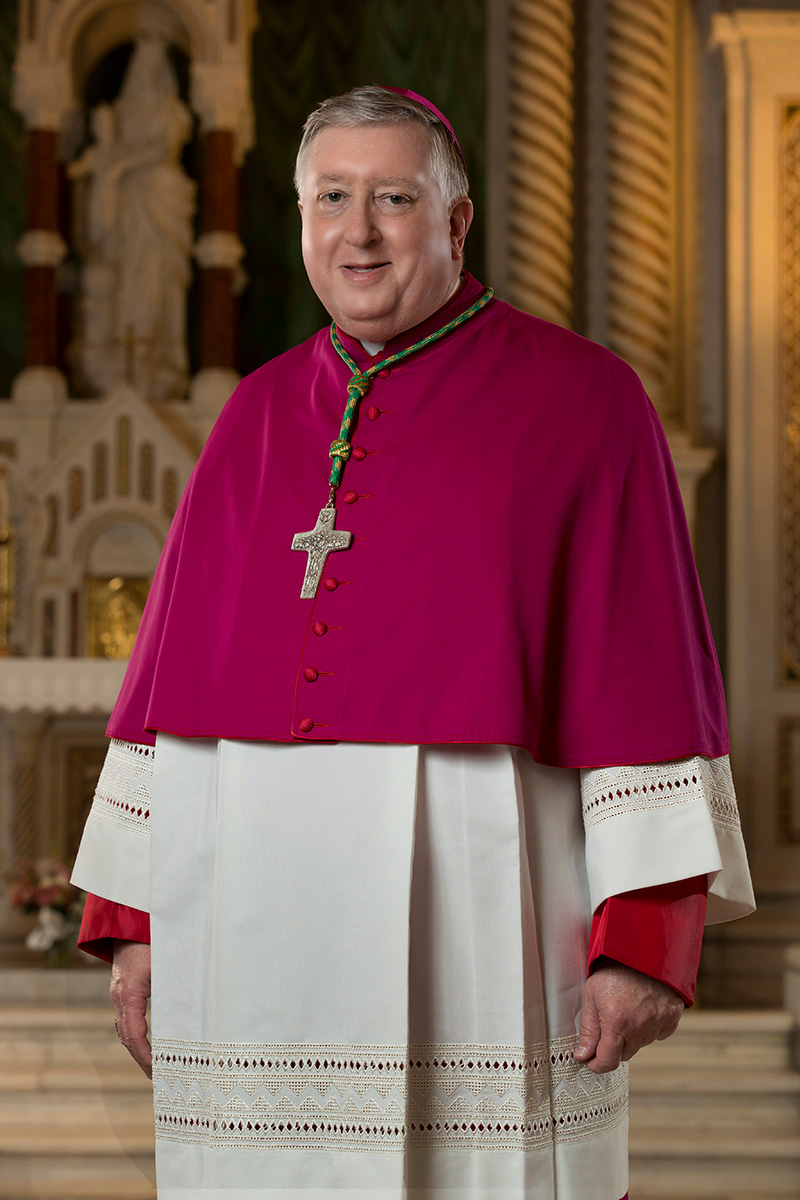
For two centuries, the Church in St. Louis has been guided by a lineage of bishops and archbishops who have preached the Gospel, celebrated the sacraments, and cared for the People of God in every age. From Bishop Joseph Rosati, C.M., our first bishop, to Archbishop Mitchell T. Rozanski today, each shepherd has responded to the Lord’s call to lead this local Church with faith, courage, and pastoral charity.
This gallery highlights the faces and names of the men whohave served as bishops and archbishops of St. Louis. As you view their portraits, we invite you to give thanks for their leadership, to remember their unique contributions to the life of the Archdiocese, and to pray for them and for all who will shepherd the Church in the years to come.



Our Patron Saints
The heritage of the Archdiocese of St. Louis is illuminated by three remarkable patron saints. Saint Louis IX, King of France, models a life of virtue, justice, and humble service. Saint Vincent de Paul teaches us to recognize Christ in the poor and to respond with generous charity. Saint Rose Philippine Duchesne inspires us with her missionary courage and her enduring dedication to prayer and education. Their witness continues to guide our Church and invites us to follow Christ with renewed faith and love.

Saint Louis IX, King of France
Louis IX was born on April 25, 1214 and was crowned King of France in 1226 at age twelve. After a regency ended in 1235 and the throne was his alone, he made devotion to his Catholic faith central to his rule.
The King was well-known for giving money to the poor, inviting them to eat at his table, even washing their feet as they sat. He built hospitals, homes, churches, abbeys, and schools.
King Louis IX led two crusades to North Africa in 1248 and in 1270. During the second crusade, disease swept through his camp, and he became ill and died on August 25, 1270. He was canonized and made a saint by Pope Boniface VII in 1297, becoming the only French monarch to achieve sainthood. His feast day is celebrated on August 25.
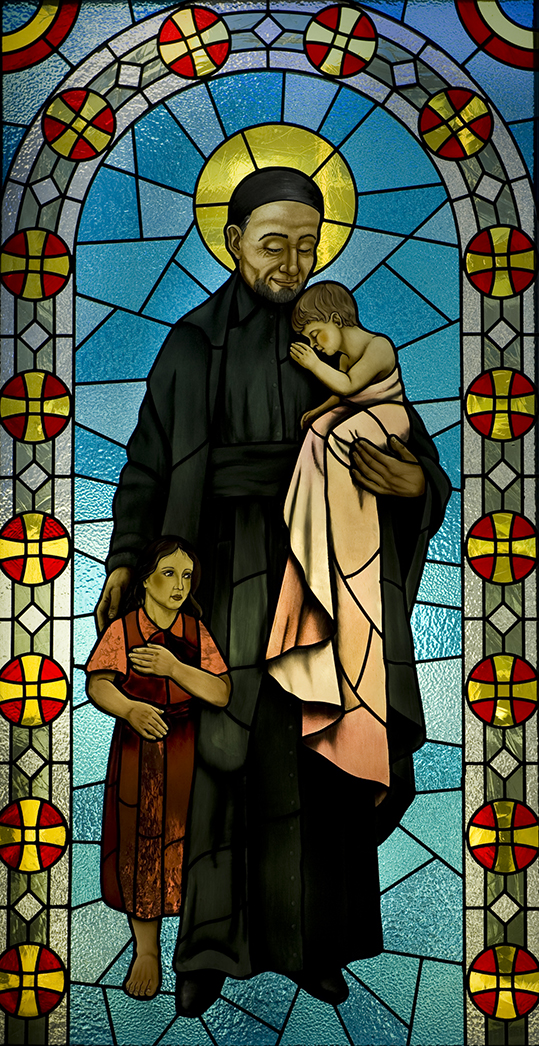
Saint Vincent de Paul
St. Vincent de Paul is known for his deep compassion and lifelong dedication to the poor, though his early ambitions were more self-focused. Born into a peasant family in France, his parents sacrificed to send him to seminary, hoping for a better life for him. He became a priest in 1600 and initially served wealthy families. His transformation came when he heard the confession of a poor, dying man who knew little of his faith. Moved by this, Vincent began preaching, teaching, and organizing missions for the poor.
Seeing the vast needs around him, he gathered like-minded priests and formed the Congregation of the Mission, devoted to the salvation of the poor. He also founded the Daughters of Charity and the Ladies of Charity, ministering to slaves, the sick, the poor, war victims, and abandoned.
First and foremost, Vincent was a man of prayer. “You must have an inner life,” he said, “everything must tend in that direction. If you lack this, you lack everything.” Even in his final years, worn out from a life of service and in continual pain, he remained gracious to all who visited him. He died in 1660 at the age of 79, and was canonized in 1737. His feast day is September 27.
More than 400 years later, his legacy lives on through the many Vincentian communities still serving those most in need around the world.
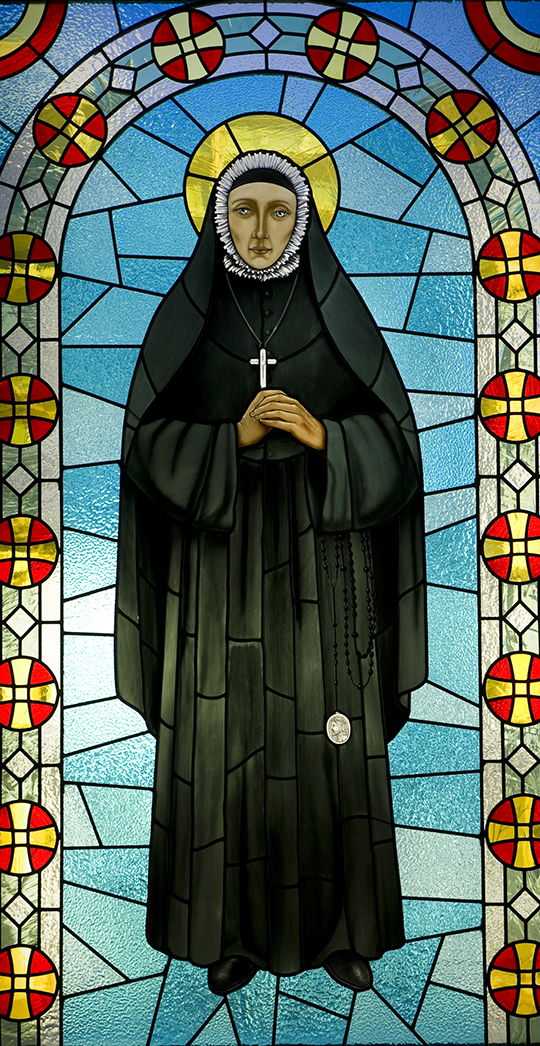
Saint Rose Philippine Duchesne
Rose Philippine Duchesne was born in Grenoble, France, on August 29, 1769. Educated by Visitation nuns at Sainte Marie d’en Haut monastery, she was drawn to their contemplative life and entered the congregation at age 19, despite her family’s objections.
After the French Revolution, she reclaimed the monastery and opened a boarding school. In 1804, she met Madeleine Sophie Barat, founder of the Society of the Sacred Heart, and immediately turned over Sainte Marie d’en Haut and entered the Society.
Philippine longed to serve as a missionary to the native people in North America. In March 1818, her dream was realized when she and four other Religious of the Sacred Heart set sail for North America. Under Bishop Du Bourg’s direction, they opened the first Sacred Heart school outside Europe in St. Charles, Missouri, on September 14, 1818. It was the first free school west of the Mississippi River and the first Catholic school in what would become the Archdiocese of St. Louis.
By 1820, they had moved to Florissant, where she opened the first novitiate. Six schools were established in Missouri and Louisiana. In 1841, at age 72, she traveled to Sugar Creek, Kansas, to serve Potawatomi girls. Though too frail to teach, her constant prayer earned her the name “Woman Who Is Always Praying.” She returned to St. Charles a year later and died there, after 34 years of missionary work in America. Rose Philippine Duchesne was canonized in 1988. Her feast day is November 18.
The Society of the Sacred Heart acknowledges that Philippine and the first RSCJ relied on enslaved persons during their initial years in North America.
To read more, please visit: https://rscj.org/shrine/home/
Museums / Shrines
Explore the museums and shrines that share the story of our Archdiocese. Each photo below links directly to its site, so you can click any image to learn more or plan a visit. These destinations offer history, art, and prayerful spaces that highlight the heart of our Catholic heritage.
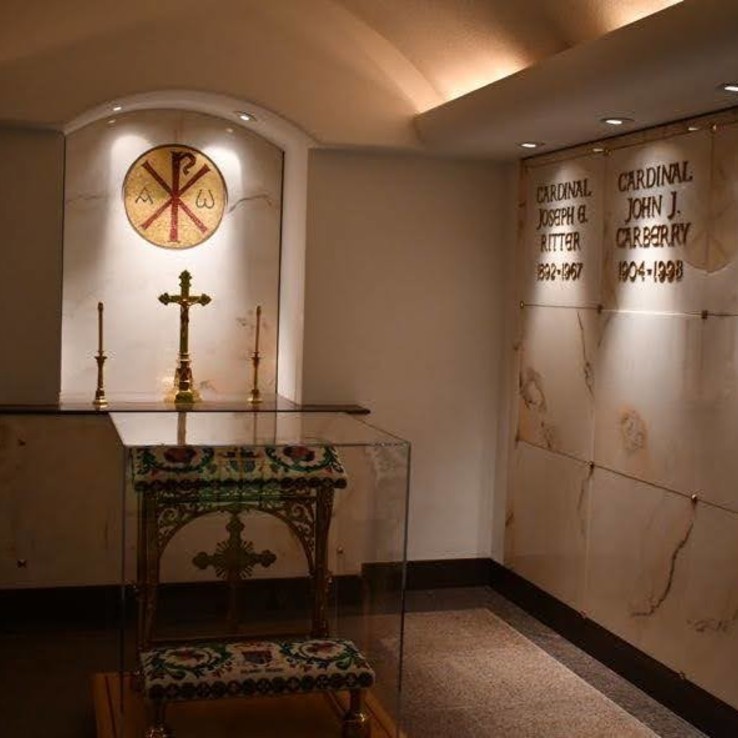
Cathedral STL
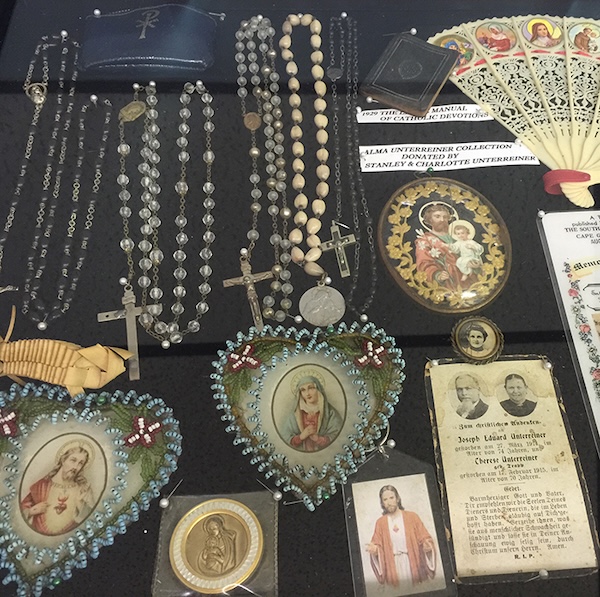
Catholic Heritage Center

Old Cathedral STL
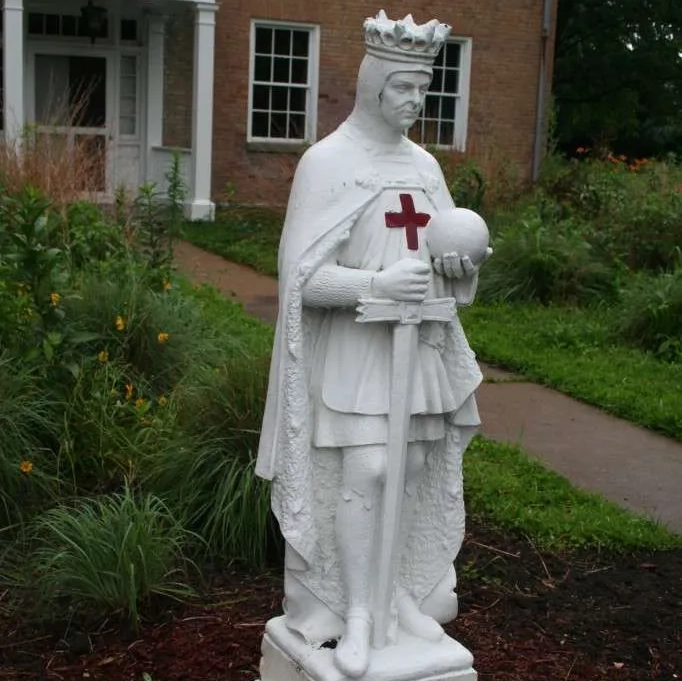
Old Saint Ferdinand Shrine
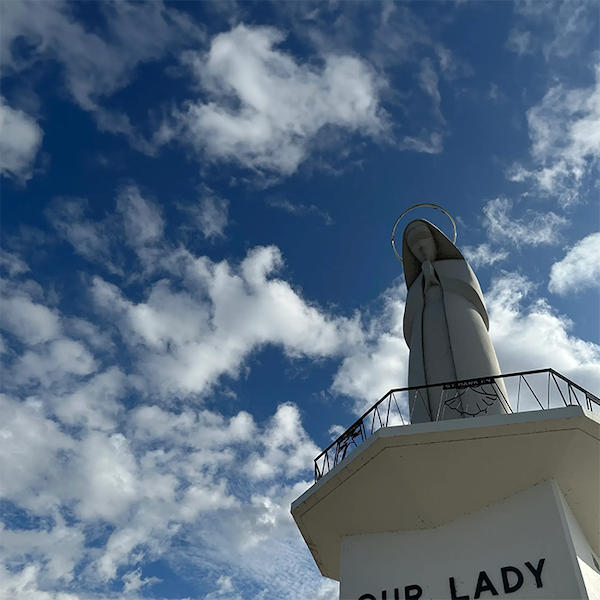
Our Lady of the River Shrine
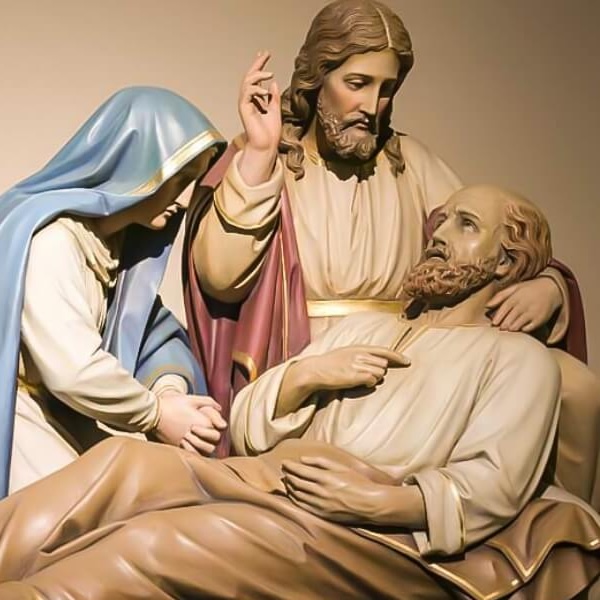
Shrine of St Joseph

Shrine of St Philippine Duchesne